
In fairness, watching a Celtic team score five goals in a European game and still fail to qualify for the next round would give some a funny turn. I’m about as familiar with classical music as a Daily Record journalist is with a thesaurus but was intrigued with the idea that something musical could be born from that infamous night when Celtic attacked and Partizan Belgrade counter-attacked mercilessly, generating nine goals between them and levels of drama and excitement rarely experienced at a football ground.
It was that energy of the occasion that left the greatest impression on the Celtic supporter. He was no stranger to music, creating his first composition aged only ten in his home town of Cumnock, Ayrshire. As he watched the game at Celtic Park that night, 30-year old James MacMillan wasn’t to know that he would go on to become an internationally acknowledged composer (and a half-decent conductor to boot). Yet the work that was influenced by that gloriously victorious aggregate defeat helped set him on a path which has seen him declared the greatest living composer in these isles. Not bad for a piece of work described by its composer as ‘the only piano concerto in the history of classical music to be inspired by the away goals rule.’
For James, the performance of Billy McNeill’s team that night was ‘characteristically passionate, frenzied but utterly futile.’ Celtic had to overcome a 2-1 deficit from the away tie in Belgrade. A minimum of two goals were needed. The game plan was obvious from the first whistle: as one newspaper reported, Celtic ‘stormed the visiting goal from the outset.’ With Joe Miller helping to bolster the striking duo of Dariusz Dziekanowski and Andy Walker, Celtic were set up for all-out attack – and did so without any obvious concern for defence.

Celtic’s leader on the pitch at the time was captain Roy Aitken, described as ‘indefatigable’ in The Times match report, who drove Celtic forward again and again after every setback (and there were many that night), roared on by the crowd who were creating a cacophony on the old terracings. ‘Feed the Bear, Feed the Bear, Feed the Bear!’ was the chant when big Roy was in full flow, rampaging through opponents and defences, carrying his team with him, fired up by the support’s encouragement and reactions. Tactics? We don’t need no stinkin’ tactics!

This relentless Celtic assault on the Yugoslavs and disregard for any kind of attempt at a meaningful rearguard action put the young composer in mind of stories he’d read of warriors from ancient Celtic and Viking forces renowned for their crazed, violent assaults on opponents. Known as ‘berserkers’, these fighting men were virtually uncontrollable, wearing wolf or bear fur and little else, who would work themselves into a trance-like frenzy before steaming into battle. Old Norse sagas portrayed them as mad men: ‘Men who went into battle without armour and acted like mad dogs or wolves. They bit into their shields and were as strong as bears or bulls. They killed men, but neither fire nor iron harmed them. This madness is called berserker-fury.’
It is now believed that the crazed appearance and invincibility of the berserkers stemmed from an unholy cocktail of magic mushrooms, alcoholic mead and hyper-ventilation, an approach not commonly favoured in modern warfare manuals. More than a few thousand Celtic fans were near hyper-ventilating that night as goals were scored and then conceded at an alarming rate – 7 (seven!) in the second half alone. Alcohol and mushrooms would have provided blessed relief from the pain of what was unfolding. It’s not known if any mandatory drug tests were carried out by UEFA post-match that night but the quality of his defending suggested Derek Whyte was under the influence of something far stronger than mushrooms.
With less than ten minutes to go, Dziekanowski’s fourth strike of the evening meant that Celtic were ahead for the first time in the tie (with the eleventh goal scored!). Now was the time for focus and clear heads, to hold on to the ball at all costs, maybe make a substitution and let the clock run down. But Berserkers have no interest in such clearly thought-out tactical ploys. FEED THE BEAR!!!

Urged on again and again by the crowd and captain Aitken, Celtic continued the onslaught on the Partizan ranks right through to the dying seconds . . . until possession was lost and the tables were turned, yet again. There was an awful inevitability that ‘the poofy guy with the gloves and the tights’ would secure retribution for the abuse he’d received all night from the home support. And so he did – heading past Pat Bonner in the 89th minute to make it 6-6 on aggregate. The crescendo that had roared approval at Dziekanowski’s final goal was replaced with deflation on a scale rarely witnessed at Celtic Park, where the eerie noise of the small band of celebrating Partizan players and subs in front of the main stand could be heard in all quarters of the old ground.
The surrounding silence was truly eerie; for the 48,000 home fans who had just hailed a fifth and surely decisive Celtic goal on the night, shock was the overriding emotion in that frozen moment.
James MacMillan used this incredible experience to craft ‘The Berserking’. Taking his cue from the do-or-die approach of the Celtic players, he applauded their courage and ferocity but took note of the suicidal tendencies that Aitken and his men shared with the original berserkers: ‘Although deadly in combat, the berserking process was paradoxically a suicidal one since, having lost their senses, they were vulnerable to a more stealthy attack. As a Scot living in the modern world this behaviour seems very familiar! I see its pointlessness as resembling the Scots’ seeming facility for shooting themselves in the foot in political and, for that matter, in sporting endeavours.’ For Partizan ’89, read Argentina ’78.
‘The Berserking’ is a half-hour of classical music consisting of three linked movements – the first buzzing with hyperactivity which, unresolved, gives way to a quiet but unsettling middle section before the piano and orchestra come out fighting alongside – rather than against – each other in the third and final movement, made up of a series of violent surges. Like the Celtic performance that night there is frantic aggression in abundance. The composer himself has even referred to it as ‘battle’ music.

It is not known whether Celtic’s berserker-in-chief that night, Roy Aitken, is familiar with the piano concerto that he helped inspire. For among his many talents, The Bear can also tinkle the ivories with some aplomb – being awarded a diploma from the Royal Academy of Music while still at school in MacMillan’s native Ayrshire. He once dressed up as Liberace for a national newspaper who’d heard of his aptitude for music. It is a warming thought on a cold night when memories of the Partizan game chill the bones to think that Roy himself recreates the frenzied experience of that September evening by belting out MacMillan’s homage to his team-mates on the Steinway in his garage extension.
35 years on, MacMillan’s concerto has achieved legendary status in some quarters. For the commentator, Simon Heffer, it is this work that ‘seals his genius as a composer.’ He pulls no punches in explaining that, for him, The Berserking is ‘magnificent, original, inventive, compelling, powerful and overwhelming.’ The greatest British classical composition from these isles since the death of Benjamin Brittan, no less. And MacMillan is not alone among classical composers in using the world’s most popular sport as his muse. Shostakovich was a life-long fan of Leningrad Zenith (now Zenit St. Petersburg); Martinů supported Sparta Prague while Elgar was a keen Wolves fan back in the 1890s and has been credited with creating the first ever football song, He Banged the Leather for Goal.
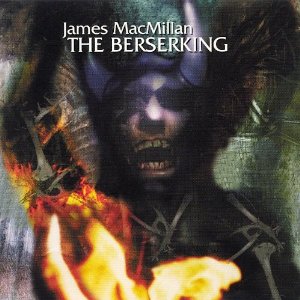
The attraction of the working man’s game to so many key influencers in classical music is a source of surprise but the importance, excitement and relevance of football was never lost on this Ayrshire Bhoy, saying that he could ‘fully understand the comparatively eccentric fascination held by Shostakovich, Martinů and so on for the beautiful game.’
His music could take inspiration from not just Celtic games but also iconic Celtic figures. In 2008 he wrote a piece entitled Walfrid, On His Arrival At The Gates of Paradise to mark the placing of the Brother Walfrid statue at the main entrance to Celtic Park. The slow air and reel were performed live at the statue’s opening ceremony by the St. Patrick’s Branch of the Comhaltas Ceoltoiri Eireann from Coatbridge under MacMillan’s supervision.
Yet another Celtic-related cause of musical inspiration and general admiration for MacMillan was the unforgettable Tommy Burns whom the composer once described as ‘the virtuosic flame-haired maestro’ and a ‘source of artistic flight in music, poetry, literature and song.’ That Tommy was capable of generating such passion and identity came as no surprise to the composer: ‘Tommy Burns’ soul burned with the legacy of devotion – a mixture of faith, family, community, culture and identity – handed down the years from Brother Walfrid: a gift from a history of dreams and aspirations shared by many of us.’
That Celtic history of dreams and aspirations and songs to sing continues to this day and the Celtic songbook has been enriched by the inclusion of MacMillan’s piano concerto which magnificently conveys the menace and chaos, furious charges and ultimate futility of Celtic’s 1989 assault on Partizan of Belgrade.
And if, if, we had held on to the 5-3 lead that night and not lost the tie overall then it’s possible the world of classical music might also have lost out on this virtuoso piece. And Ivan Golac might never have become Dundee United manager.
This article first appeared in Issue 2 of The Shamrock
James MacMillan: Piano Concerto No. 1 ‘The Berserking’ (1989)
James MacMillan conducts the BBC Philharmonic Orchestra:
Issues 1-10 of The Shamrock fanzine can be bought here: https://the-shamrock.net/magazine/

 the shamrock