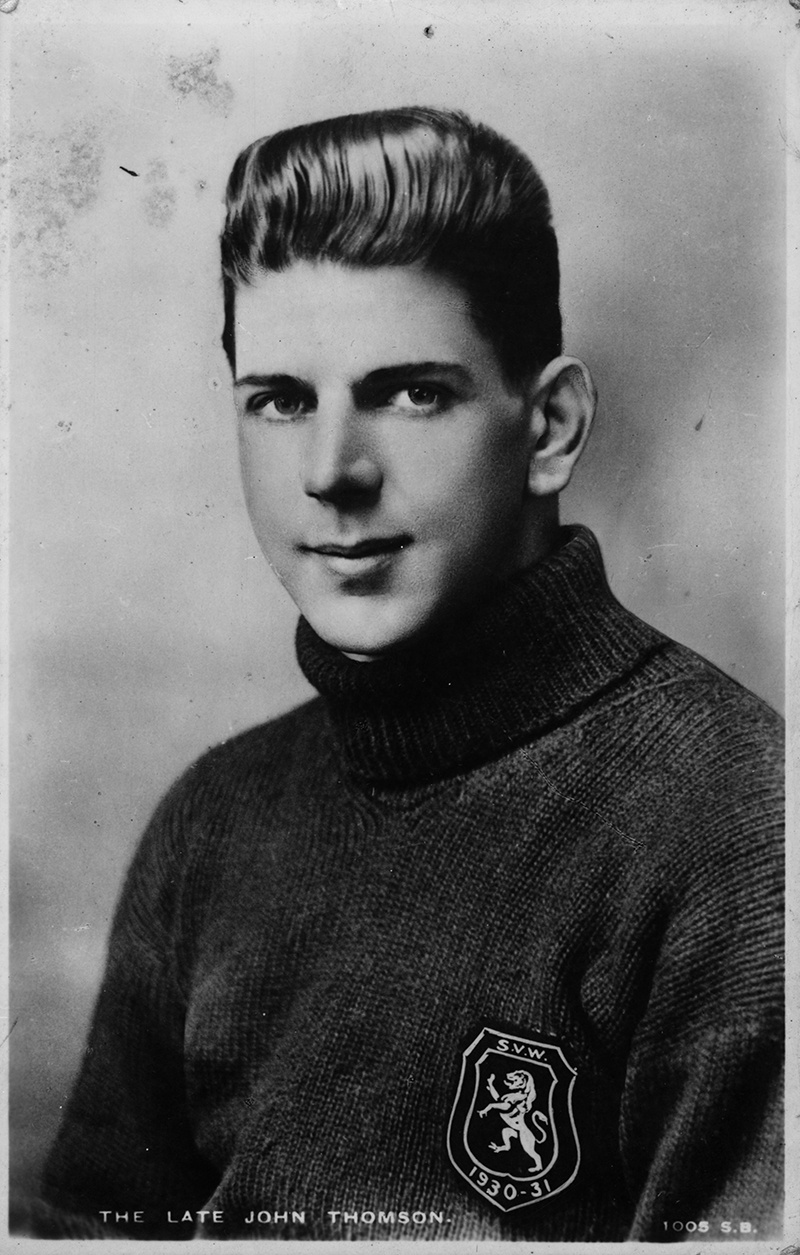
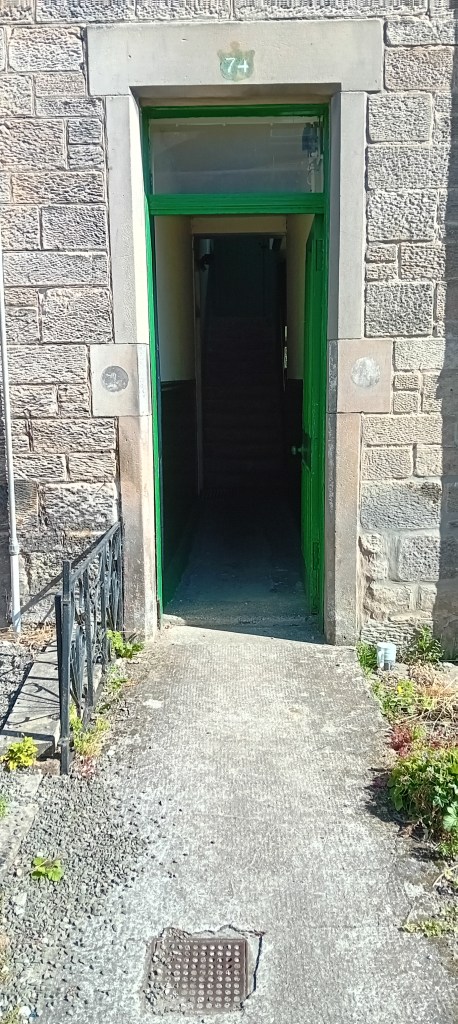
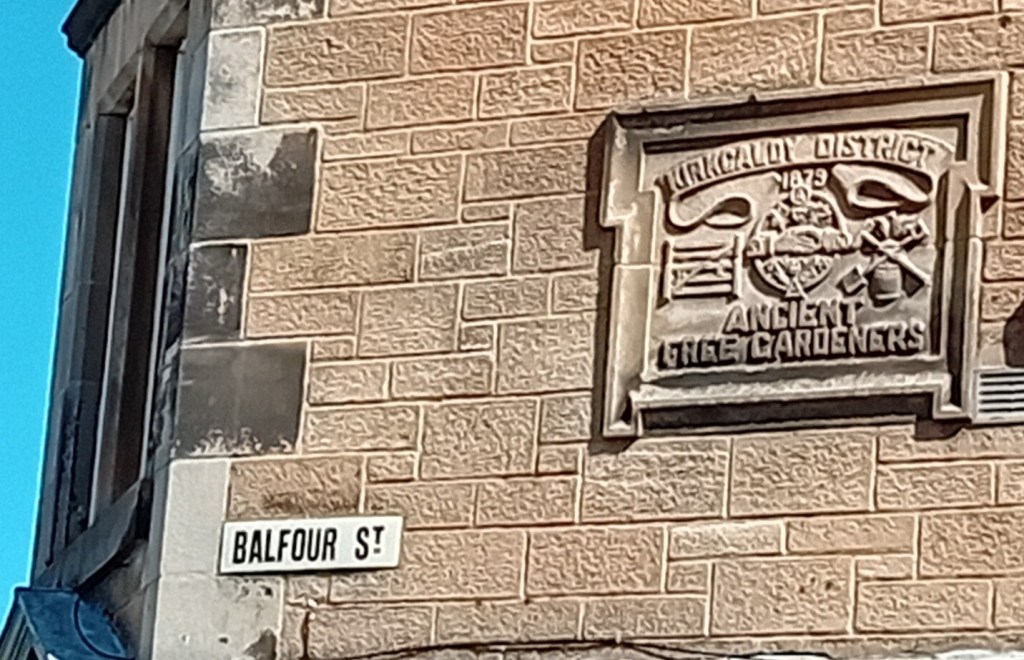
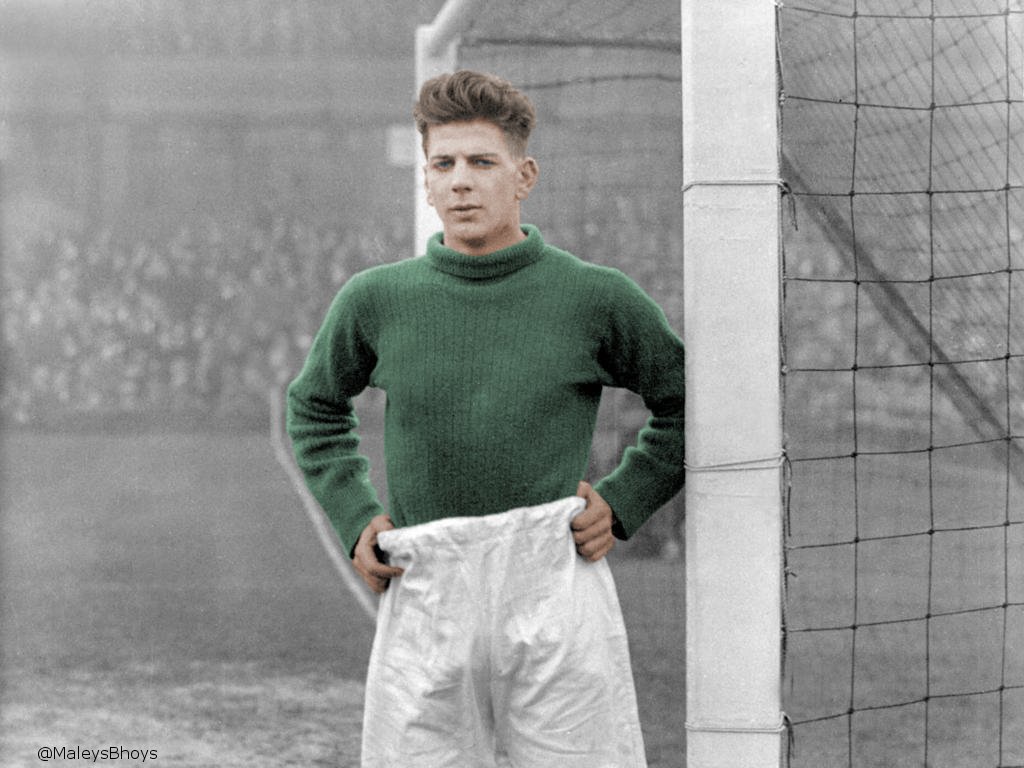
Born on January 28th 1909 at 74 Balfour Street, Kirkcaldy, Fife this young boy would go on to win international honours and eternal glory as Celtic’s most famous goalkeeper.


Johnny in 1920, centre front, aged 11 with his parents, three brothers and two sisters. In June 1924 he played in his first cup final, as Auchterderran and District Schools beat Cowdenbeath Schools. Johnny kept a clean sheet in his side’s 2-0 victory.

In 1925, aged 16, Johnny joined Wellesley Juniors, a successful team from Methil. The Fife Free Press wrote that they had signed “a champion goalkeeper in Thomson from Bowhill.” Wellesley Juniors wore green and white hooped jerseys and originally were called Denbeath Celtic.

After a game against Denbeath Star on Oct 30th 1926, 17 year old John joined Celtic. Chief scout Steve Callaghan and first team player Alec Thomson, who had also played for Wellesley, watched him that day. He signed the papers on a fuse box next to a tram stop in St Clair Street, Kirkcaldy.

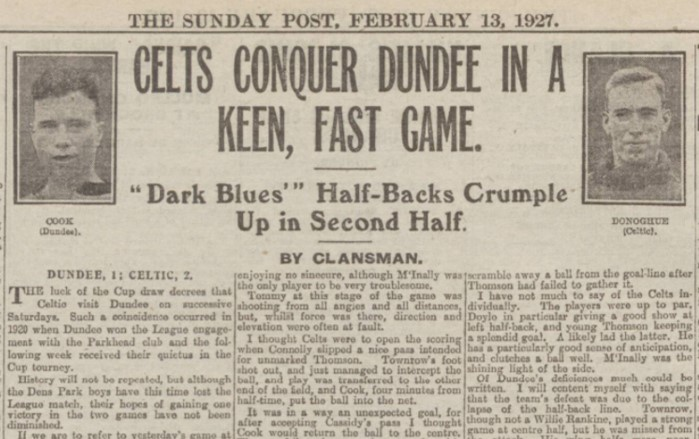
Only 3 months after joining Celtic, John made his debut away against Dundee in a 2-1 win at Dens Park. Aged only 18, he would remain Celtic’s first choice goalie from that point onwards. He received warm praise in the press for this debut appearance.
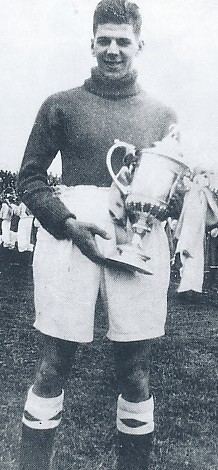
On 16th April 1927 John was in goal for the Scottish Cup Final against East Fife. Celtic won 3-1 and he received his first major medal at age 18. He was one of 14 Fifers on the pitch. He, Alec Thomson and ‘Jean’ McFarlane had played for the Methil team Wellesley.

Johnny had 7 shut-outs in the first 10 games of season 1927-8. The press commented favourably on his goalkeeping abilities: ‘His clutch at the high balls was firm and sure. His cat-like springs showed the limbs acting to quick intuition.’
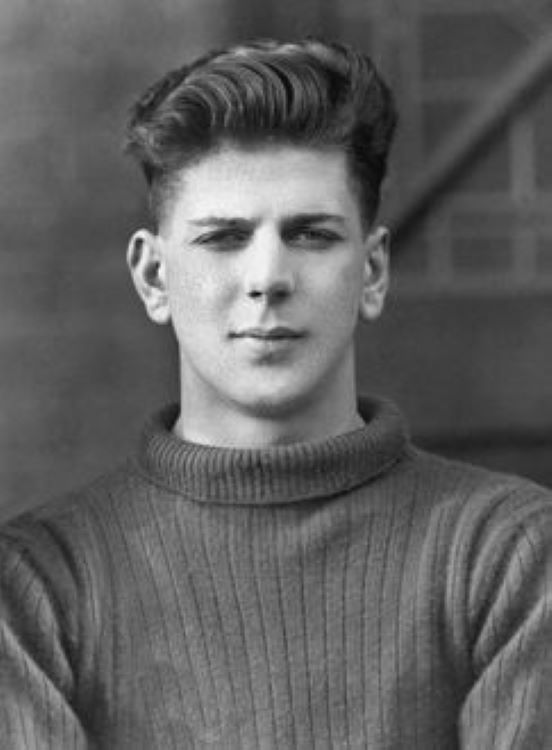
In October 1928 Johnny was first selected for the Scottish League – aged 19 – in an international encounter against the Irish League and played on three more occasions against the English League.

In season 1928-9 Johnny played 50 times for Celtic in all competitions. He had a 40% shut-out record and won a Glasgow Cup medal for the second year running, featured here in the final against Queen’s Park before a crowd of 40,000 at Hampden.
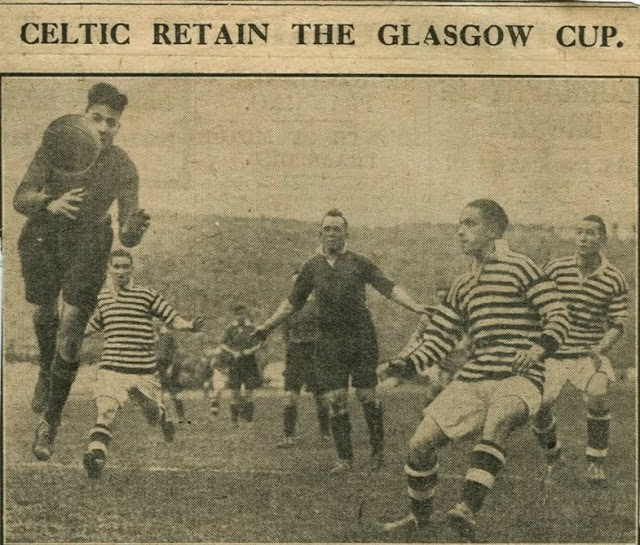
Pathe cinema footage of the final here:
In the first ever book about Celtic, ‘The Celtic Story’, Dr. James Handley wrote: ‘The generation that saw John Thomson in action will agree that it would be hard to exaggerate his magical skill. Neither before nor since have they seen a goalkeeper so swift, so elegant, so superbly safe in operation . . . ‘
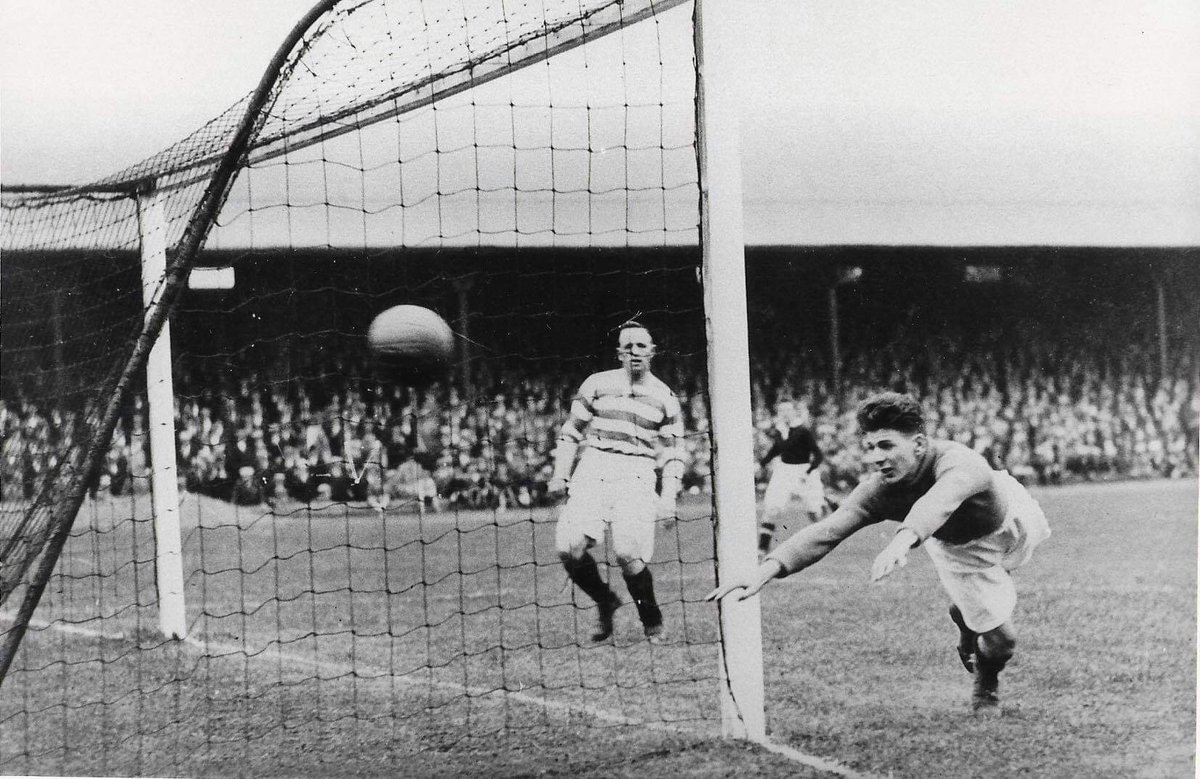
‘ . . . He had the spring of a jaguar and the effortless grace of a skimming swallow.’ One journalist wrote that: ‘The secret of Thomson’s goalkeeping genius was the way he could find extra muscular power to change course and find fresh drive in mid-air.’
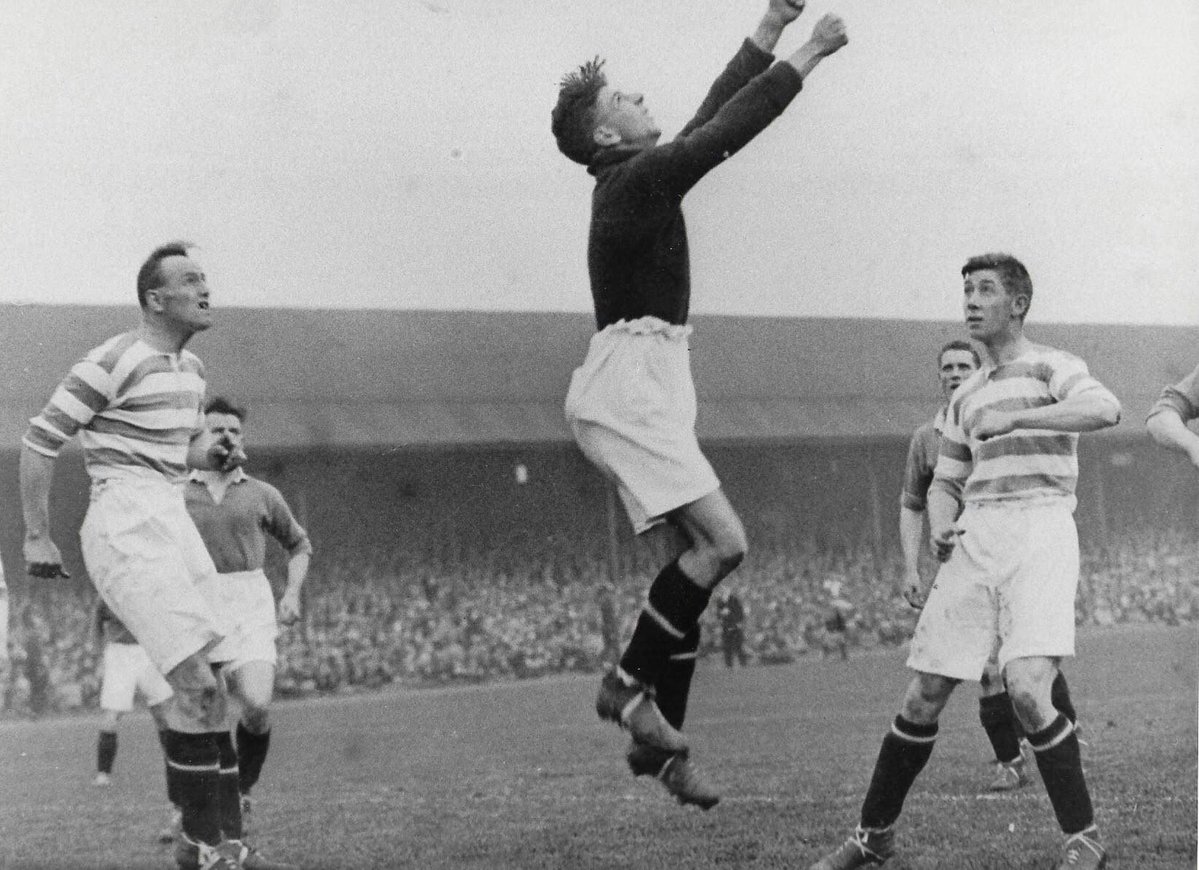
In the press box during a game where Johnny pulled off a remarkable save, one reporter turned to another and simply said ‘Cinquevalli! Cinquevalli!’ Paul Cinquevalli was a world-famous German juggler and acrobat from the turn of the century.

Johnny’s performances for Celtic and Scotland prompted speculation that English clubs might try and tempt him south of the Border

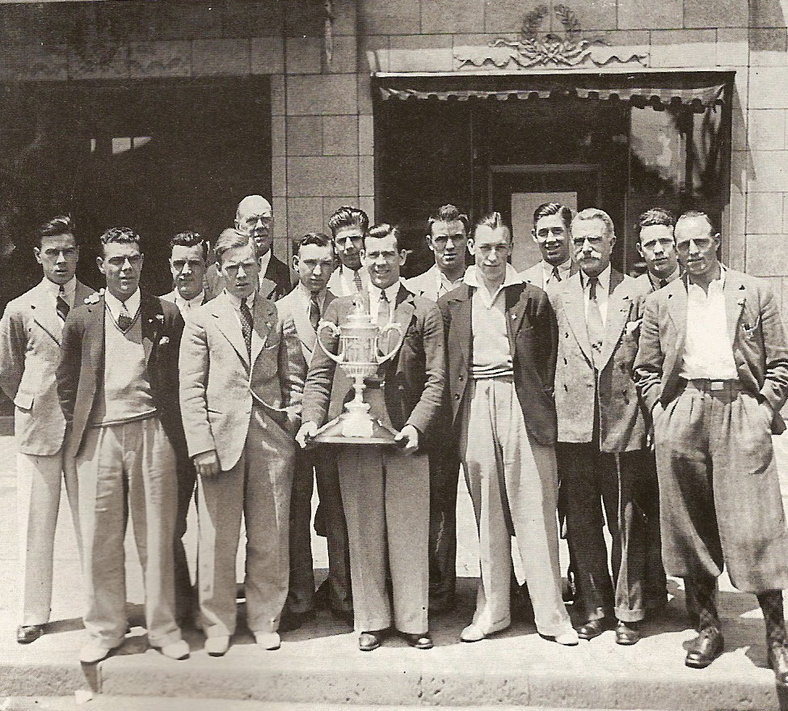
Johnny won the Scottish Cup for the second time with Celtic in May 1931. The team then embarked on a tour of the United States and Canada that summer.
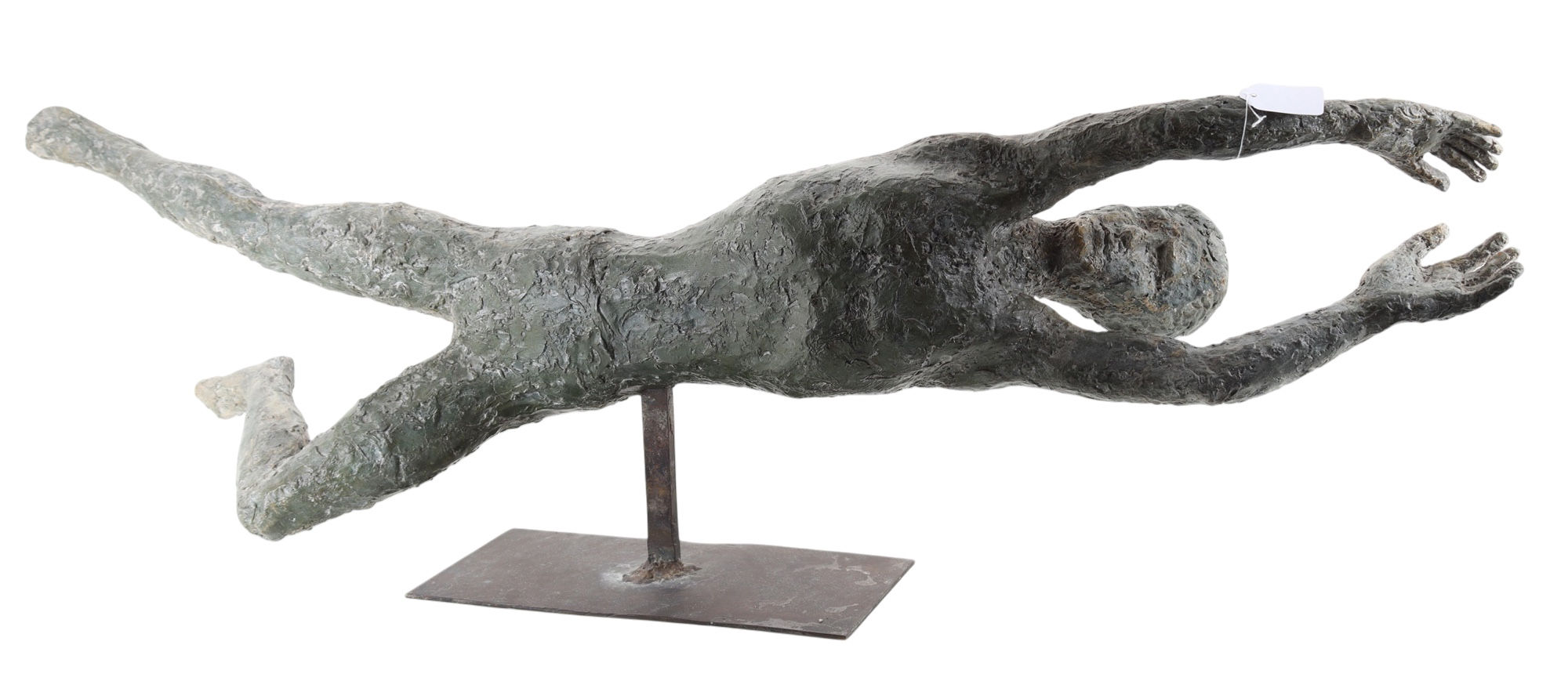
The world-renowned artist Benno Schotz made this sculpture of Thomson entitled ‘The Prince of Goalkeepers’
John in action at Ibrox on 5th September 1931 clearing from Rangers striker Sam ‘Blondie’ English. In an unfinished letter to a friend written before the game, he described it as “a death or glory affair.”
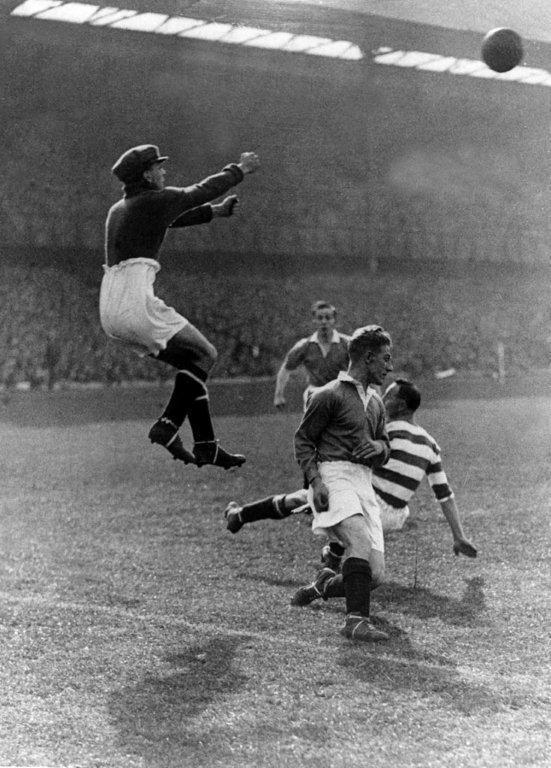
Early in the second half, Sam English broke through the Celtic defence. John Thomson came off his line and dived towards the striker, his head colliding with the player’s knee. Sam English was completely blameless in the accident. John Thomson was taken to the Victoria Infirmary and treated for a skull fracture. The emergency operation failed and he died later that night, just as his parents arrived from Fife to see him.

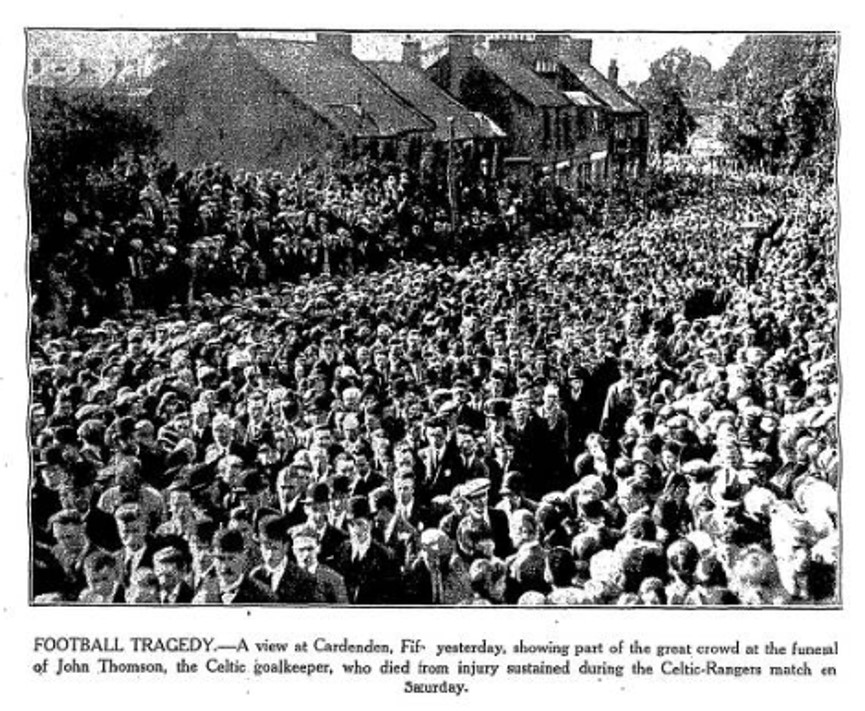
The death of Scotland’s international goalkeeper at the age of 22 shocked the country. There was a huge outpouring of grief at the funeral in his hometown of Cardenden in Fife.


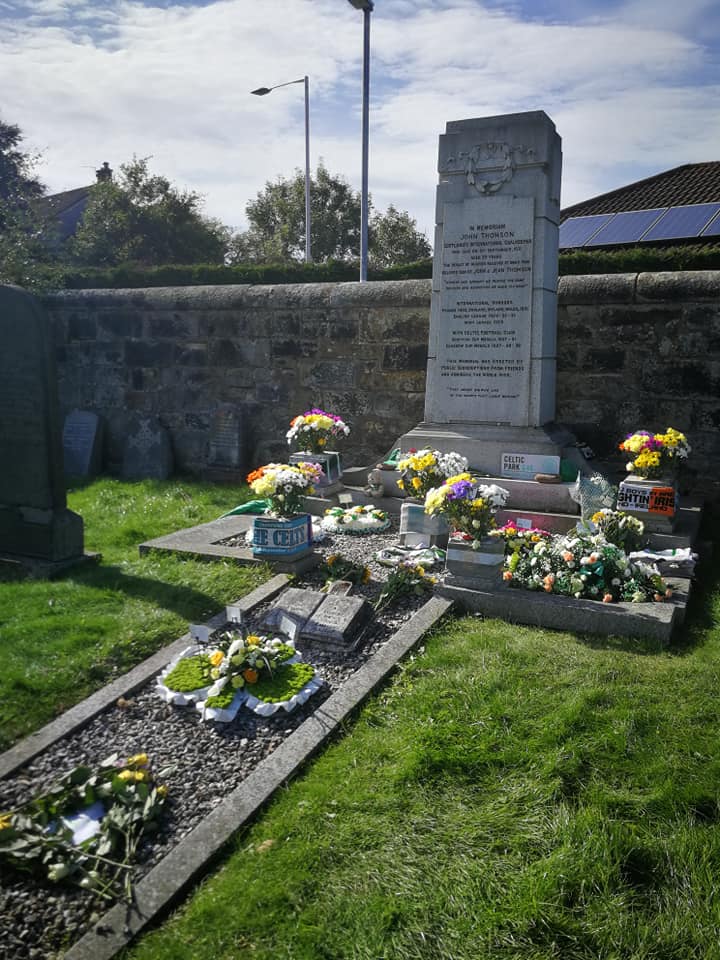
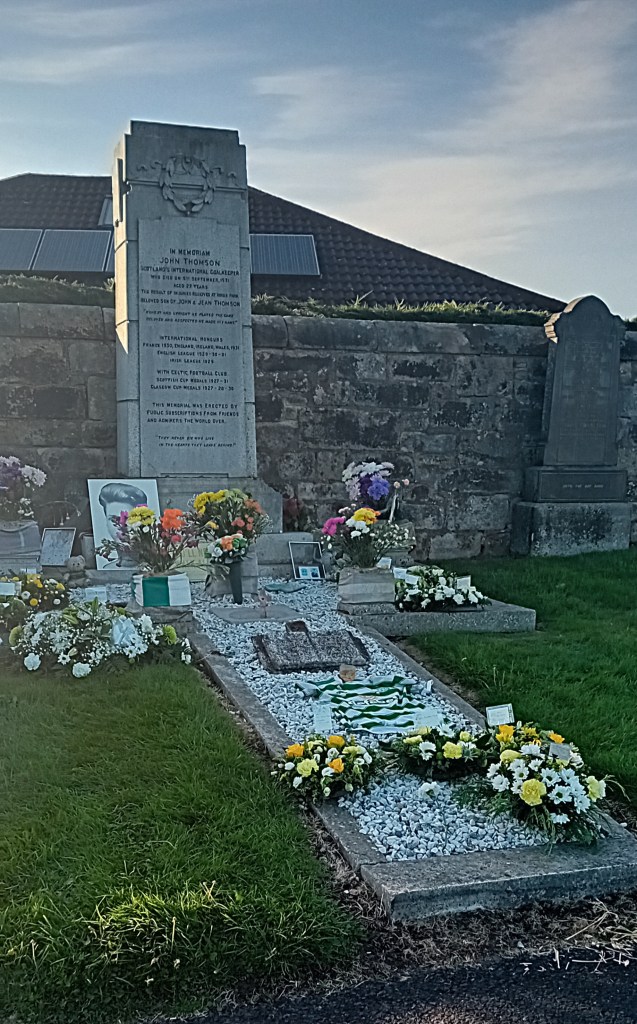
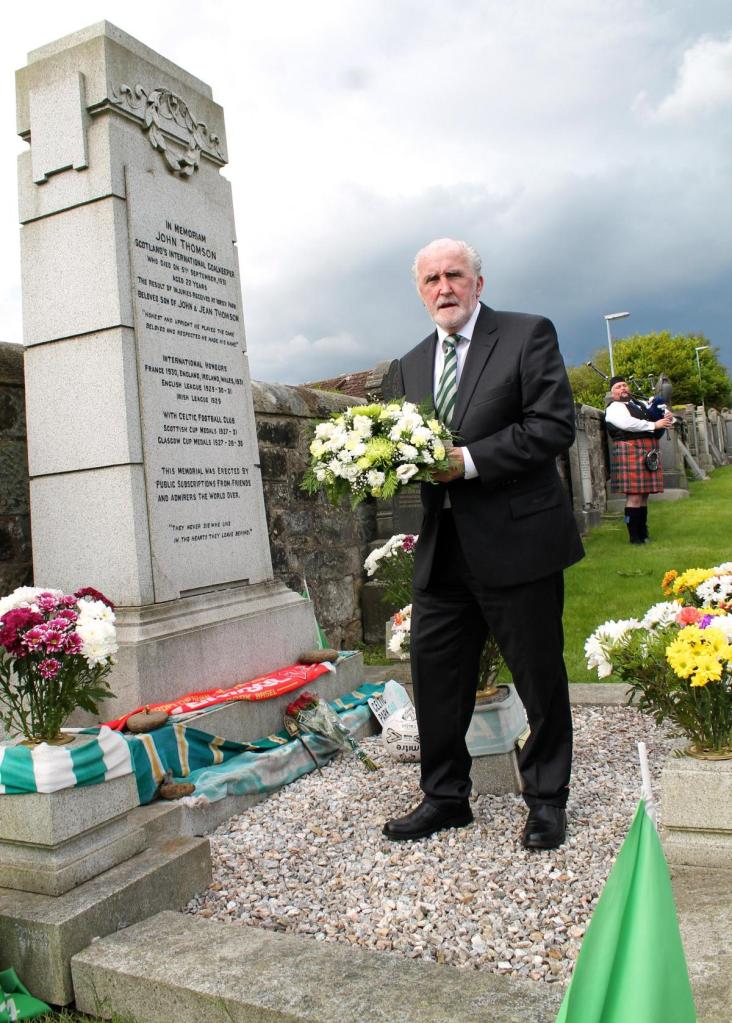
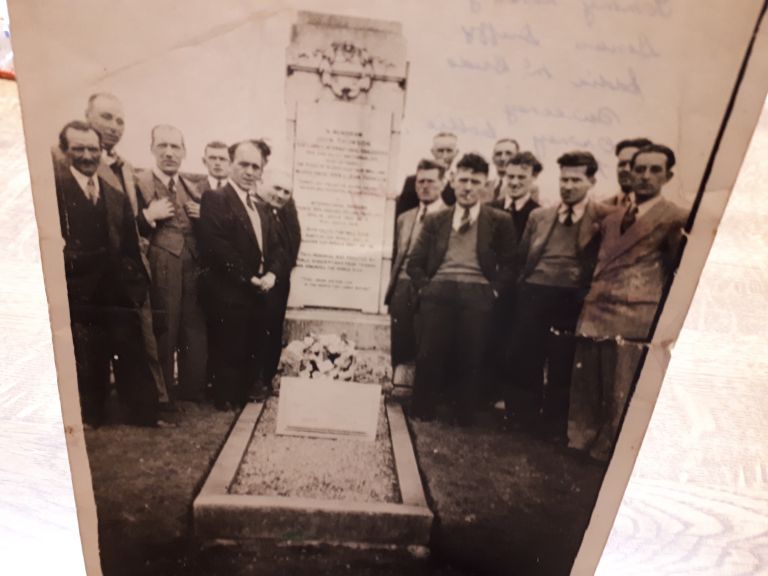
His resting place in Bowhill Cemetery has become a place of pilgrimage for generations of Celtic supporters.
He is also remembered in song by the Celtic support:
A young lad named John Thomson,
From the west of Fife he came,
To play for Glasgow Celtic,
And to build himself a name.
On the fifth day of September,
‘gainst the Rangers club he played,
From defeat he saved the Celtic,
Ah but what a price he paid.
The ball rolled from the centre,
Young John ran out and dived,
The ball rolled by; young John lay still,
For his club this hero died.
I took a trip to Parkhead,
To the dear old Paradise,
And as the players came out,
Sure the tears fell from my eyes
For a famous face was missing,
From the green and white brigade,
And they told me Johnny Thomson,
His last game he had played.
Farewell my darling Johnny,
Prince of players we must part,
No more we’ll stand and cheer you,
On the slopes of Celtic Park.
Now the fans they all are silent,
As they travel near and far,
No more they’ll cheer John Thomson,
Our bright and shining star.
So come all you Glasgow Celtic,
Stand up and play the game,
For between your posts there stands a ghost,
Johnny Thomson is his name.

 the shamrock