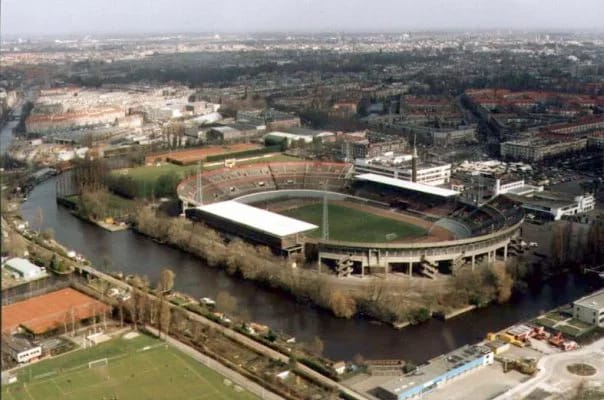
It was one of Celtic’s most impressive and joyous away trips in Europe. Yet it was only truly appreciated by the three-thousand strong travelling support due to a television black-out which almost belies belief in an age where UEFA competitions are saturated by full-blown media coverage. Celtic’s opponents in the European Cup first round, the Dutch champions Ajax, had shirt sponsors at the time and for that reason both BBC and ITV refused to broadcast the game. This meant that those who couldn’t travel to the Netherlands by bus and ferry (air travel being beyond the wallets of most football fans then) had to make do with listening to the game on the radio. For many stuck back home it would be their first true experience of aural pleasure . . .
The away support thronged the terracing to the right of the main stand in the city’s Olympic Stadium and were a sight to behold even before the game started, as Charlie Nicholas recalled: “We came out early to practise and I saw this huge mass at the far end. I asked George McCluskey what it was. He said it was the Celtic support. We just stood there staring at it. It was unreal.”
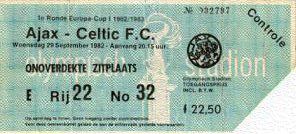
It is fair to say that those Celtic fans had travelled more in hope than expectation after an exhilarating game in the home leg two weeks previous. Johann Cruyff, then 35 years old, had strutted his stuff imperiously while coaxing an excellent performance from his young team-mates. This former European Player of the Year – dubbed ‘El Flaco’ (The Skinny One) by an adoring Catalan public during a glorious spell at Barcelona – had led Ajax to three successive European Cup triumphs from 1971 to 1973 and had returned the year before to his first love (where his mother was employed as a cleaner when he was a child) for a career finale which saw his pay linked to attendances. In his first season back, he led Ajax to the Dutch championship and there were great expectations about how far they would go in the European Cup under Cruyff’s leadership. The game was switched, as was usually the case with Ajax’s European ties, away from the small De Meer Stadium (which housed only 19,000) to the 65,000 capacity Olympic Stadium. And for Celtic’s visit it was full for the first time in nine years (earning Cruyff a £130,000 wage for a single night’s work).
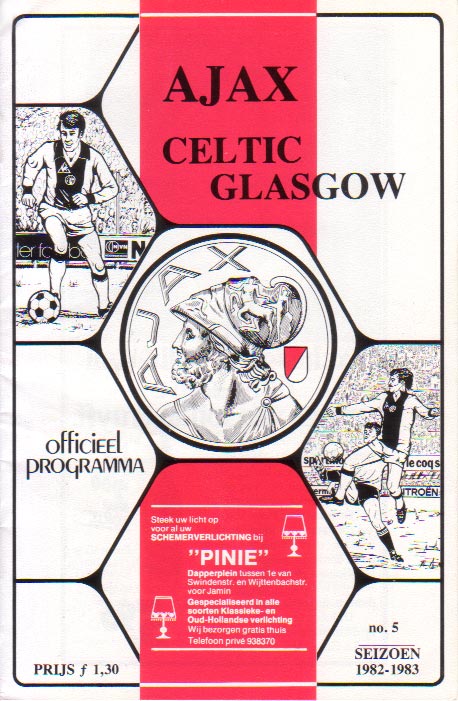
Cruyff is still regarded by many as the greatest European footballer of all time. Mastery of the ball was his principal asset leading to him once being dubbed “Pythagoras in boots” because of his penchant for precise, angled passes. He was also an effortless goal-scorer but he was not the only star in the Ajax firmament in 1982 as the Dutch club maintained their reputation for fostering outstanding youth talent. 19 year old striker Wim Kieft was the current European Golden Boot holder and other Dutch internationalists in the team included Gerald Vanenburg, Peter Boeve and experienced ‘keeper Piet Schrijvers. Future internationalists Marco van Basten and Frank Rijkaard didn’t make it off the bench against the Celts. The Ajax midfield was made up of a trio of superb young Danish players – Soren Lerby, Jesper Olsen and Jan Molby – who in good time would move on to Bayern Munich, Manchester United and Liverpool respectively.
Olsen and Lerby had already made their mark in the first tie at Celtic Park. It looked as though Celtic would get off to a sensational start as Frank McGarvey had two shots saved in the opening minutes but it was Olsen who grabbed the eye and the lead in the 4th minute – coming off the wing and leaving three Celtic players in his wake before slotting past Pat Bonner at the near post. Ten minutes later and Celtic equalised from the penalty spot through Charlie Nicholas. The penalty award came after Tommy Burns had jinked his way past Cruyff – and then had his legs taken away from him.

Only four minutes passed before Ajax were back in the lead. A second away goal was struck by Lerby but it was Olsen and Cruyff who created it, the winger floating a ball into the centre for the on-rushing Cruyff to lay it off expertly into Lerby’s path for him to finish with a delicate lob over the on-rushing Bonner. Billy McNeill’s team didn’t let their heads go down though. A tidy Nicholas finish was ruled off-side but then, in the 27th minute, a headed Charlie flick sent McGarvey haring through the Ajax defence and this time he beat the keeper comfortably. At half-time it was all-square in what Tom Campbell and Pat Woods referred to (in 1990) as “probably the most exciting 45 minutes played in a European tie at Celtic Park”. Paul McStay and Murdo McLeod came close to putting Celtic in the lead in the second-half but it finished a draw and the Dutch team left two away goals to the good and with a generous standing ovation from the 56,000 crowd inside Celtic Park.
No-one in the media gave Celtic a chance in the second leg. Manager McNeill though made a defiant promise: “If we do go out – and we are not ready to accept that yet – then we will go out with all guns blazing. We won’t be dropping out of the European Cup like a damp squib. Ajax had better believe it. I know we’re up against it, but weaknesses are there and it is up to us to take advantage of them.” The Daily Record referred to Celtic’s hopes as “a lost cause” while the Daily Express described the idea of a Celtic victory in the Olympic Stadium as entering “the realms of fairy-tales and miracles.”
A fairy tale you say? Oh well, if you’re sitting comfortably , then I shall begin . . .
The Scottish Champions of 1982 could match Ajax in terms of youthful endeavour – the only Celtic player aged over 30 in the away leg was captain Danny McGrain while five members of the team (Bonner, Aitken, Reid, McStay and Nicholas) were 23 or under. 17 year old McStay had only made his debut in January that year and more than held his own in midfield against his Danish counterparts in the first leg. Billy McNeill was crafting a fine team based on a robust defence which allowed for the classic Celtic emphasis on attacking football and they had successfully fought off Alex Ferguson’s Aberdeen to the title in the two previous seasons. Cesar could also make effective tactical innovations when required as well. The appearance in Amsterdam of debutant Graeme Sinclair, a recent signing from first division Dumbarton, was a great surprise but McNeill had decided he had to try and shackle Cruyff. Sinclair himself wasn’t overawed by the prospect: “If I am told to mark Cryuff I won’t lose any sleep. I have done marking jobs before at Dumbarton.” Gulp.
Up front, while Ajax looked to the genius of Cruyff, Celtic had gallus Charlie Nicholas leading the line. The darling of the support, Nicholas was a wonderfully instinctive footballer with the touch of a top-class playmaker who could score goals in virtually any situation. In his first season he bagged 28 goals and the media label ‘Charles de Goal’. He broke his leg in January 1982 but stormed back after the summer, scoring 30 goals before Christmas and 48 for the season in total – the best scoring record of any Celt since Jimmy McGrory hit 50 in season 1935-36. The Olympic Stadium – and the European Cup – was a stage on which the young Nicholas was determined to shine: “Cruyff was a player who had been one of my heroes when I was a youngster watching the superb Dutch side on the telly. OK, he was a veteran, but someone with special skills, someone who belonged in any gallery of greats . . . We felt that we could win, that maybe, just maybe, this was to be the chance of European glory that we had all been chasing.”

McNeill’s team, resplendent in green jerseys with white pin-stripes and white trim, entered the arena fearless and within a few minutes were already targeting Schrijvers’ goal. Nicholas had the Ajax defence on tenterhooks in the 3rd minute when he broke through on their blind side and only a brave dive at his feet minutes later by the Dutch international keeper prevented him from snatching the precious away goal. Celtic’s tactical changes were allowing them to control the game more than in the first leg. Danny McGrain was keeping Olsen on a much tighter lead, the return of Roy Aitken had brought more stability in the centre of defence and Sinclair was making a nuisance of himself in harnessing Cruyff. This helped lead to an incredible development just after the half hour, as reported in The Glasgow Herald: ‘The move began with a devastating pass from McStay and then a strong run from Sinclair up the left. When the ball was moved on to Nicholas the young striker beat two men, passed to McGarvey, was in place for the return, and swerved a delicious little shot round the keeper.’
That short report does a slight dis-service to both Celtic strikers. The return pass from McGarvey into the path of Nicholas was an excellent back-heel which Nicholas then used to completely deceive two defenders, dropping them both on their arses, before he curled the ball with his left foot – from just inside the box – above Schrijvers and into the top left-hand corner. Four Celtic players involved, four Ajax players left dumb-founded by the movement of Nicholas. His finish was absolutely exquisite. It was, and remains, one of the greatest ever Celtic goals scored on foreign shores.
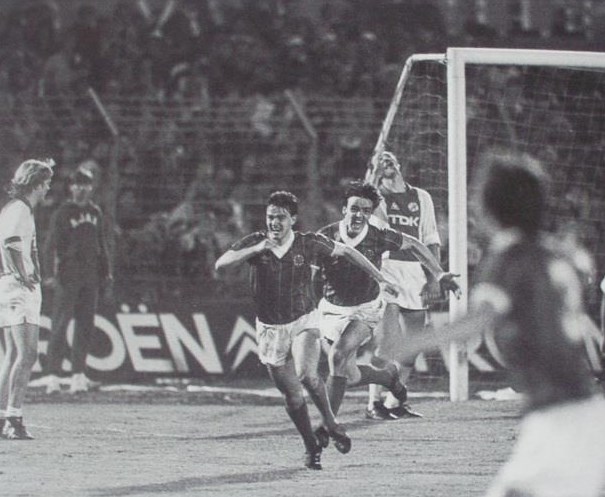
The players’ celebration drew them towards the euphoric corner of the stadium, to the left of the goal, housing those three thousand Celtic fans. The writer Graham McColl captured perfectly what happened next: ‘A solo supporter went weaving down one of the steep terraces inside Amsterdam’s Olympic Stadium with his arms outstretched as if in preparation for flight. Celtic were also ready for take-off . . . as the ball curled into the net, Nicholas darted towards the terraces to point at the celebrating Celt; one exuberant entertainer acknowledging another.’ The exuberant entertainer in the yellow t-shirt was Celtic fan Joe Miller of Not The View fame who continues to follow the team on their foreign adventures. Joe still sports the scar he got climbing the fence penning in the Celtic support to start his run down the terracing that night.
Celtic held on to their precious advantage until half-time. As soon as the second-half was underway they were subject to relentless Ajax attacks. It was a similar scenario to eleven years earlier in the same stadium when Jock Stein’s team met Cruyff (that time man-marked by Davie Hay) and Co. at the European Cup quarter-final stage and held the Dutch until half-time – before conceding three second half goals and going out of the tournament to the eventual champions. On this occasion Pat Bonner was Celtic’s last line of defence and he made two excellent saves early in the second half – first turning a Cruyff free-kick around the post and then pulling off an amazing jump to push a Kieft header over the crossbar. Celtic were restricted to occasional breakaways and the threat to Bonner’s goal remained – on the hour mark an audacious bicycle kick from Schoenaker just missed its target.
The relentless pressure finally paid off for the Dutch halfway through the second half. The ball made its way in front of the Celtic defence out to Vanenburg on the right side of the box. He hit a seemingly tame shot with the outside of his right boot across the goal but its flight deceived Bonner and it bounced in off the far post to level the game on aggregate – with Ajax back in the driving seat thanks to the two away goals in Glasgow.
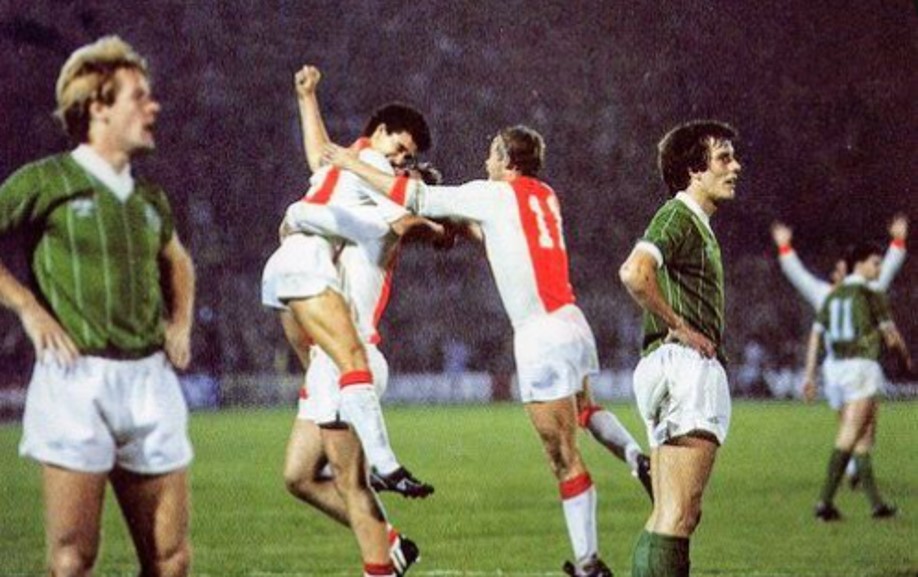
Billy McNeil stood by his vow to go out, if Celtic had to go out, with all guns blazing. Winger Provan was replaced by striker George McCluskey in the 72nd minute. Davie Moyes came on for the tiring McStay soon after and this allowed Roy Aitken, ‘an elemental force’ according to Campbell and Woods, to move forward into midfield. Celtic were taking the game to the Dutch.
In the 82nd minute a ball was headed clear by the Ajax defence out to Celtic’s right midfield where Graeme Sinclair picked it up and went on a foraging run down Celtic’s right. With no little class he side-stepped one and then another opponent before floating in a perfect cross to the heart of the Ajax penalty box – where Frank McGarvey had ghosted in between the two central defenders. He met the ball with his head as he was falling back. It looped up and over Schrijver’s head . . . on to the top of the crossbar and behind. McGarvey picked himself up, uttered an oath as he walked away and received a commiserating pat on the shoulder from the referee. The Italian ref – and everyone in the stadium but especially McGarvey – knew that was Celtic’s big chance. And it was gone.

Yet still Celtic pressed on. Cruyff departed the field due to an injury with only three minutes left. His job was done, his money for the night well-earned. Ajax were seeing the game out. Into the last minute, Celtic had possession but there was no way through down the left wing. Reid played it back to MacLeod who passed into McGrain in the centre. Ajax had every player behind the ball, chasing and harrying. The Celtic captain hit a shot which ended up in a melee of players in front of the Ajax penalty box. It was at this moment that time seems to stand still.
The ball is ferried from McGarvey to Nicholas. He plays it quickly to McCluskey, hovering over on his left. George’s recall of what happens next is as sharp today as his reactions were that night: “ . . . my marker left me and went towards Charlie before he passed the ball. I had an opening. I took the ball on my right foot, drew it back to my left, and then hit it.’ McCluskey’s perfectly measured shot was driven across Schrijvers into the opposite corner of the net. He had done it. In the final minute. HE HAD DONE IT! 2-1 on the night, 4-3 on aggregate to Celtic. It would prove to be Celtic’s best result in Europe for the next two decades.
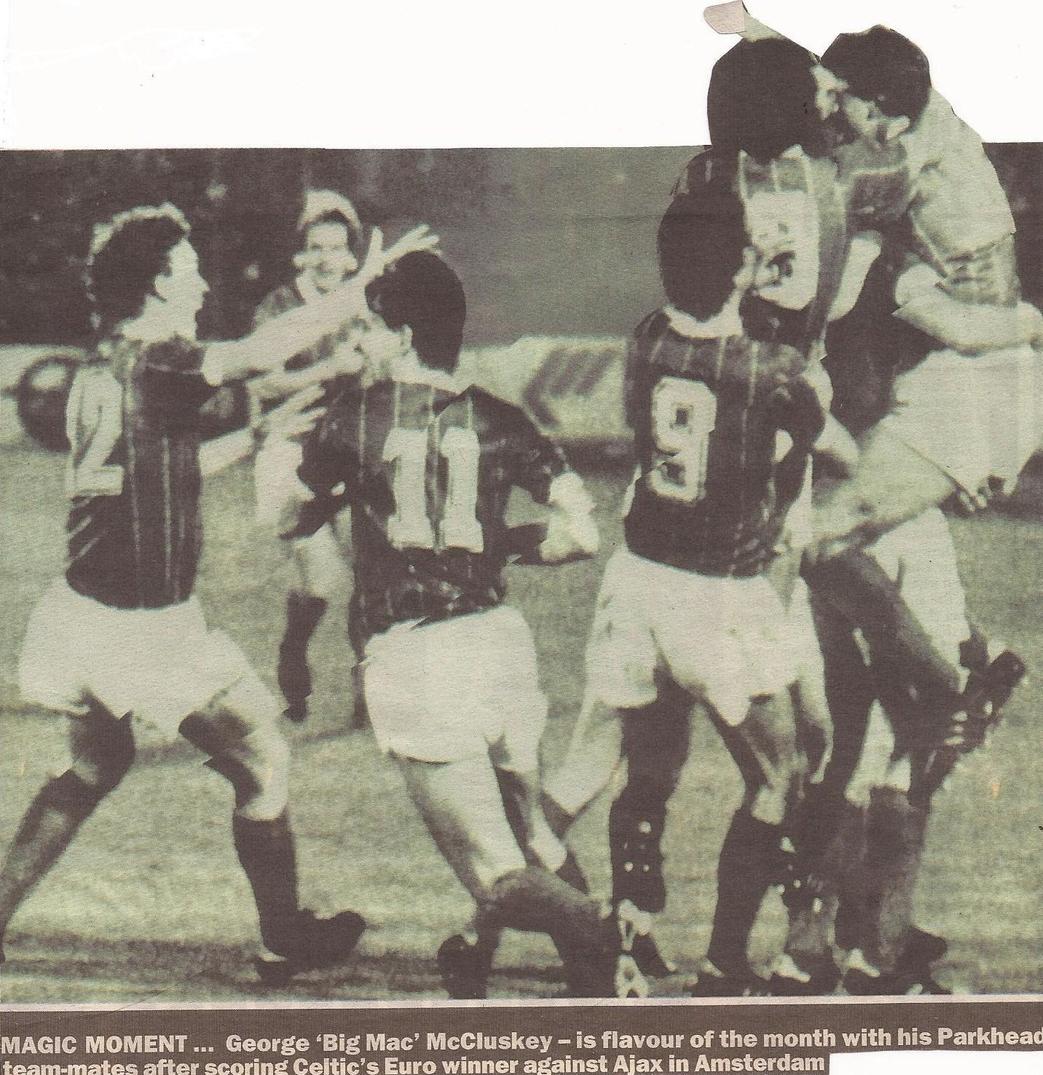
While transistor radios were sent flying with joy across living rooms and bedrooms back home, the whole Celtic contingent in Amsterdam took celebration to a new level. At the final whistle McNeill led the charge off his bench on to the field to join the party with his young team and some of the support. Veteran trainer Neilly Mochan managed to pull a muscle in the delirium – almost thirty years on from his Coronation Cup triumph – as he told one newspaper: “It’s the first time I’ve ever done that and I’ve played a good few times for Celtic.”
When he finally got off the pitch Charlie Nicholas remembered he had an appointment with the Dutch Master to keep. He was desperate to swap jerseys with Cruyff but had been unable to do so due to the late substitution. He waited patiently to get into the Ajax dressing room and found Cruyff on the treatment table. He agreed to swap and gave Nicholas his jersey from the floor. It would be some time later when Charlie realised he’d been thrown a dummy by Cruyff. The Dutchman was famed for wearing the No.14 jersey, whether domestically or on international duty. This jersey in Charlie’s possession had No.23 on it. He’d just been passed the one closest to Cruyff at the time. It later turned out that Davie Moyes had beaten him to the great man’s jersey.
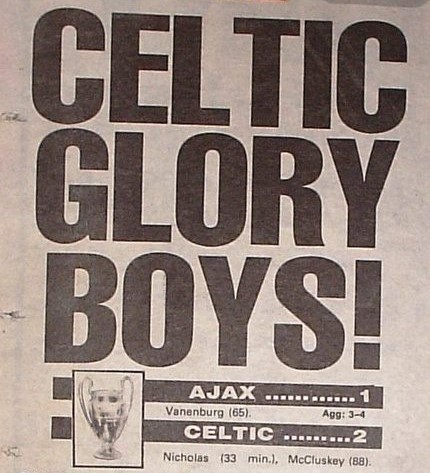
The night belonged to Charlie and Celtic though. Thirty minutes after the game had finished Billy McNeil had to lead his players back out on to the pitch to take the acclaim of the Celtic support one more time. They were still there in the Olympic Stadium, singing and dancing. The Scotsman reported that ‘For them, and Celtic, it was an unforgettable night.’
One song took hold on the terracing that night among the celebrating fans which could be heard at Tannadice the following weekend when the Celts returned to domestic action and occasionally throughout the remainder of that season. The tune was familiar but the words had been altered to help commemorate a memorable night in the ‘Dam when the highs, for once, were not drug-induced:
“When it’s spring again, we’ll sing again, Two-One in Amsterdam!”
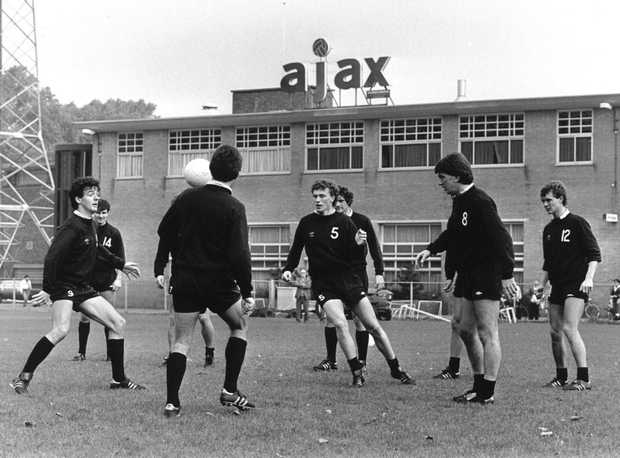
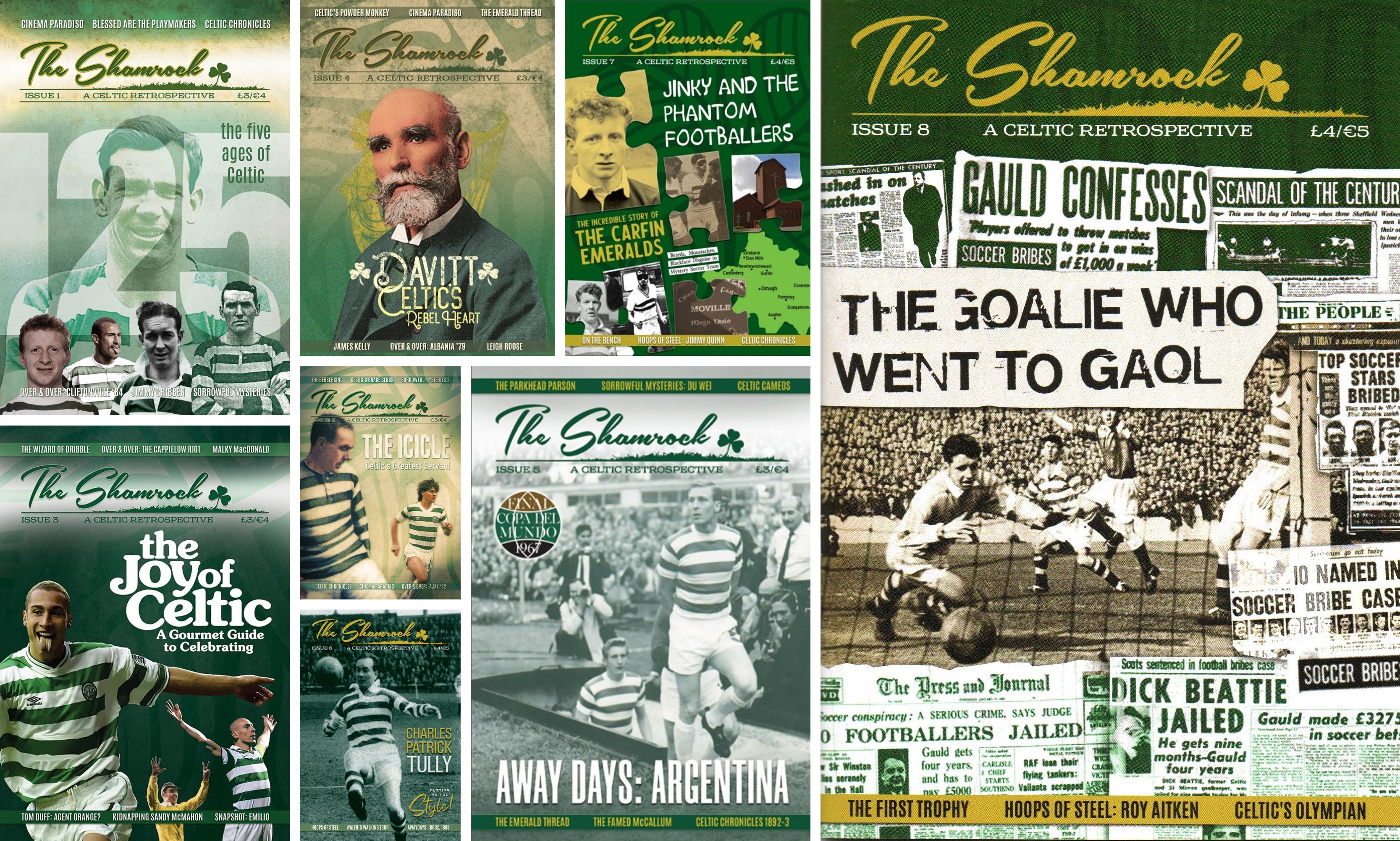
This article first appeared in issue 2 of The Shamrock – Celtic Retrospective fanzine
To buy back issues of The Shamrock click here:

 the shamrock